
Professional Ice Dam Removal & Prevention Services
Expert Ice Dam Solutions.
Safe & Effective.
Your trusted ice dam removal specialists, providing professional assessment and safe removal services throughout the region. We address ice dams on roofs, prevent water damage, and implement long-term prevention strategies to protect your property during winter months.
When ice dams form on your roof, immediate professional intervention helps prevent serious water damage and structural issues. At Rosales Roofing, we provide comprehensive ice dam services including removal, damage assessment, and strategic prevention planning to protect your property throughout winter weather conditions.
Ice damming occurs when snow melts throughout the day and refreezes as temperatures drop which create barriers that may trap water. Ice dams are commonly found along eaves, valleys, and roof transition areas. This trapped water can seep under shingles, into walls, and cause extensive interior damage. Our experienced team understands the complexities of ice dam formation and uses proven methods to address both immediate concerns and underlying causes.
We focus on safe, effective techniques that remove ice dams without damaging your roofing system. Beyond removal, we assess contributing factors such as insulation, ventilation, and structural conditions that may make your roof susceptible to ice dam formation. This comprehensive approach helps you understand not just the current situation, but how to minimize future occurrences.
Whether addressing active ice dams, repairing related damage, or implementing preventive measures, our goal is to provide clear information and effective solutions tailored to your specific situation. Contact us for professional ice dam assessment and recommendations designed to protect your property.
Ice Dam Issues & Solutions
Understanding ice dam formation, warning signs, and the comprehensive solutions we provide to protect your roof and property.
Understanding Ice Dam Problems
Learn about common ice dam issues and how professional intervention helps protect your roof and prevent costly damage.
Ice dams form when heat escaping through the roof melts the snow sitting on top of it. That meltwater runs down to the eaves, which stay cold because there is no heated space beneath them, and refreezes at the edge. Repeated freeze-thaw cycles build that frozen ridge up until it blocks drainage, and the water backing up behind it has nowhere to go except under the shingles.
Large icicles hanging from the eaves, a ridge of ice along the roof edge itself, gutters sagging or pulling loose under the weight, and water stains appearing on interior walls or ceilings are the common signs. Icicles alone are not proof of a problem, but icicles together with ice built up on the roof edge usually are. Catching it early matters, because the damage happens when meltwater backs up under the shingles, not when the ice first appears.
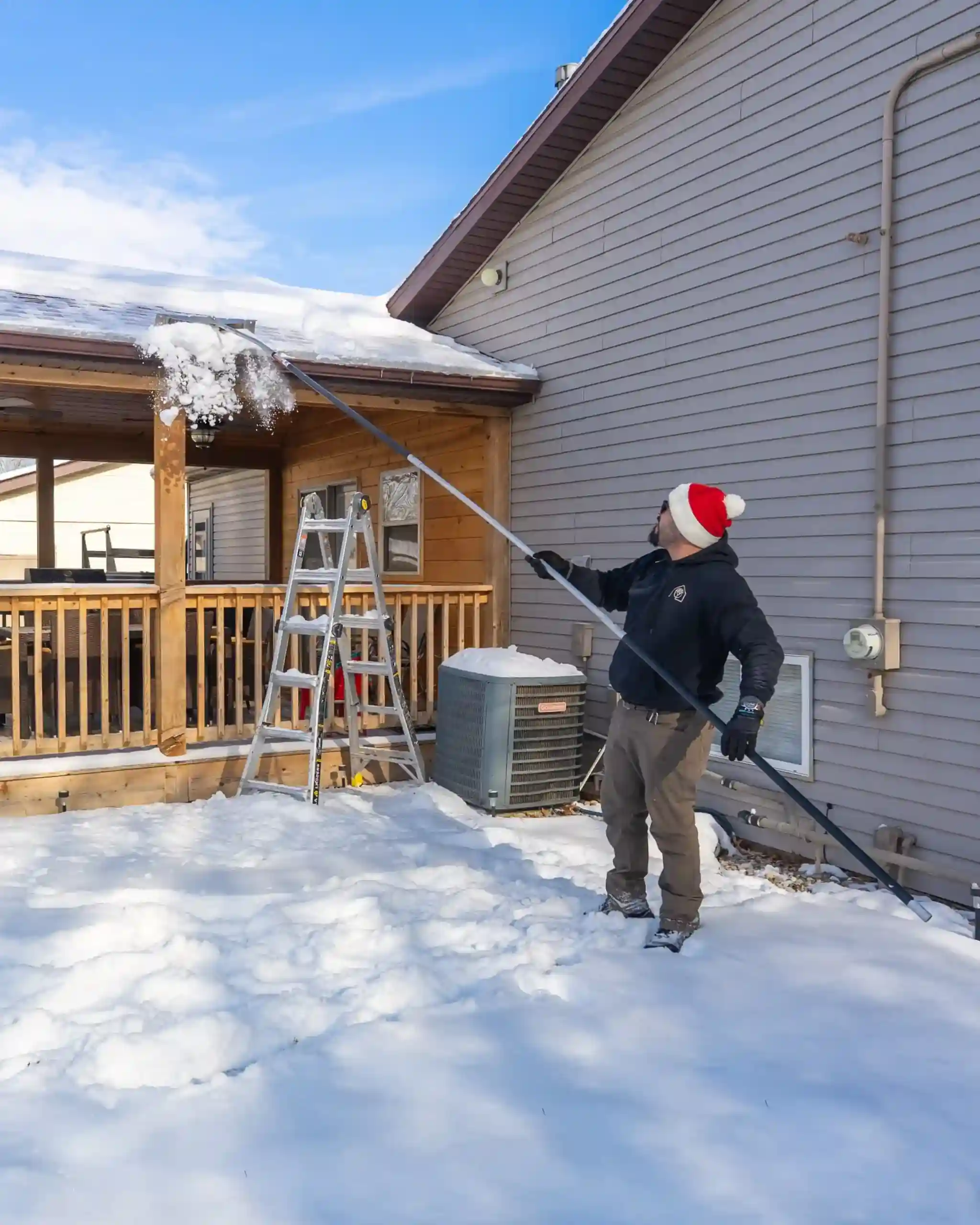
We clear the snow load and the loose ice from the places dams form, mainly the eaves, valleys, and roof transitions, using snow rakes, shovels, and salt rather than anything that would gouge the shingles. Taking the snow off above the dam removes what keeps feeding it. Chipping at the ice with an axe or hatchet, or aiming a pressure washer at it, is what breaks shingles and gutters, which is why the ice comes off gradually instead.
When water backs up behind an ice dam it runs under the shingles and into the structure, where it shows up as stained ceilings, wet insulation, damp wall cavities, and peeling paint. Wet insulation also stops insulating, which makes the heat loss that caused the dam worse. We check the roofing materials, insulation, walls, and ceilings so the full extent is known and everything can be dried out before mold or structural problems set in.
Ice dams are a heat problem more than a weather problem, so preventing them means keeping the roof deck cold. That comes down to sealing the air leaks that let warm air into the attic, bringing insulation to an even depth across the attic floor, and balancing intake and exhaust ventilation so the space under the deck stays near the outside temperature. Raking snow off the lower roof after heavy storms helps in the meantime. Correcting the cause costs less than repeated emergency removal.